
Across the sector, 92% of nonprofits now use AI in some capacity, yet only 7% report major improvements in organizational capability — that gap, from a benchmark of 346 nonprofits in the 2026 Nonprofit AI Adoption Report, is the whole problem with "AI training." Adoption is nearly universal; transformation is rare. If you run a nonprofit in the Triangle, you've lived it. You signed up for a free national webinar, a recorded course, maybe a lunch-and-learn. You watched it. You nodded. And then nothing in your week actually changed. This guide sits under our AI for nonprofits in Durham hub, and it's about the gap between watching AI training and actually using AI. The report's authors call that gap an "efficiency plateau," and the single biggest lever for crossing it is training that actually changes how people work.
What is the best free AI training for nonprofits?
The best free AI training for nonprofits pairs a structured fundamentals course with hands-on, repeated practice on your real work. The free fundamentals courses worth your time:
This guide is part of our AI for Changemakers hub for mission-safe AI adoption in the Triangle.
- NTEN — free AI guides and adaptable sample policies
- TechSoup / Microsoft Digital Skills Center — "Exploring AI with Microsoft Tools"
- Anthropic AI Fluency for Nonprofits — free course on working fluently with AI assistants
- NetHope — free, self-paced AI skills course series
A one-time webinar rarely changes behavior. Reinforcement on your own grant, donor, and intake tasks is what makes the learning stick and show up in your week. That second half is the part almost everyone skips, and it's why so much free training evaporates. Let's break down both halves.
Why most AI training for nonprofit staff doesn't stick
Here's the uncomfortable truth: the problem usually isn't the curriculum. The free courses are good. The problem is the format — a single sitting with no reinforcement — colliding with how human memory actually works. Learners forget an average of about 70% of new information within 24 hours, and up to 90% within a week, without reinforcement. That's the Ebbinghaus forgetting curve, and it is the single best explanation for why your staff watched an excellent AI webinar in February and remembered none of it by March. One-off training fights against the brain instead of with it. The fix is well-documented too. Spaced repetition — revisiting and practicing a skill over time — can roughly double long-term retention compared with cramming it into one session. A cohort that practices weekly beats a webinar that explains brilliantly, every time. The adoption data tells the same story from a different angle:
- Per the 2026 Nonprofit AI Adoption Report, 81% of nonprofits use AI individually and ad hoc, while only 4% have documented, repeatable workflows. Training that never reaches a written, shared process leaves you in the 81%.
- 76% of nonprofits do not yet have an AI strategy, even though 96% feel they have at least a basic understanding of what AI can do, per the TechSoup AI Benchmark Report. That's a knowing-doing gap, not a knowledge gap.
- Only 15% of nonprofits have an organizational policy for responsible AI use, per Candid, even though 80% of 850 surveyed organizations report familiarity with AI. So the failure pattern is consistent. Staff learn the concepts, never build a repeatable workflow, have no policy to operate inside, and forget most of it within a week. None of that is solved by a better webinar. It's solved by structure plus reinforcement plus a real task.
The free AI training that actually exists (and is genuinely good)
Before you pay anyone for AI training, know that a strong free curriculum already exists from credible sector partners. As NTEN, the Nonprofit Technology Enterprise Network, frames it: "Every staff member, board member, program participant, and community member should have access to the training they need to be involved in intentional decisions about AI adoption in nonprofits." These are the on-ramps worth bookmarking.
| Free resource | What it covers | Best for |
|---|---|---|
| NTEN AI Resource Hub | Curated AI guides and adaptable sample AI policies — all free (note: NTEN's AI for Nonprofits professional certificate is paid, with limited scholarships) | Building a responsible-AI policy |
| TechSoup / Microsoft Digital Skills Center | On-demand microlearning, incl. "Exploring AI with Microsoft Tools" (concepts, ethics, prompting, Copilot) | Self-paced staff onboarding |
| Microsoft Learn — AI Skills for Nonprofits | Free self-paced learning path on AI fundamentals | Individual skill-building |
| NetHope — AI Skills for Nonprofit Professionals | Free, self-paced course series (with Microsoft Elevate) | Program & field teams |
| Anthropic — AI Fluency for Nonprofits | Free course on working fluently with AI assistants | Leaders who want depth on how to actually prompt |
| Google for Nonprofits | Eligibility-gated free Workspace, Ad Grants, and AI tools | Verified 501(c)(3)s on Google's stack |
These cover the "fundamentals" half of the answer well. The honest caveat: every one of them is self-paced or webinar-format, which means every one of them runs straight into the forgetting curve unless you bolt reinforcement onto it. Free content is necessary. It is not sufficient.
A real AI training curriculum for nonprofit staff
If you want training that sticks, treat it like onboarding, not a one-time event. Here's the sequence we'd recommend any Triangle nonprofit run — most of it free.
Phase 1 — Fluency (Weeks 1–2)
Pick one free fundamentals course above and have the whole team complete it. Goal: shared vocabulary and a baseline comfort with prompting. Anthropic's AI Fluency or the TechSoup/Microsoft series both work. Don't over-shop; finishing one beats starting three.
Phase 2 — Guardrails (Week 2)
Write a one-page responsible-AI policy before you scale usage — you'd be in the better-prepared 15%. NTEN publishes sample policies you can adapt in an afternoon. Cover: what data never goes into a public model, who is the human author of record, and which decisions a model may never make alone.
Phase 3 — One real workflow (Weeks 3–4)
This is where training becomes capability. Choose a single repetitive, language-heavy task — a grant report, a donor thank-you sequence, an intake summary — and build it as a documented, repeatable workflow. This is the move from the 81% (ad hoc) into the 4% (documented). Our AI for nonprofits in Durham guide walks through the highest-leverage first workflow for most orgs.
Phase 4 — Reinforcement (Weeks 5–8)
Practice the workflow weekly, in a group, with someone who can answer "why did it do that?" in real time. This is the spaced-repetition layer the free webinars structurally can't give you — and it's the difference between roughly doubling retention and forgetting it all by week two. Once one workflow is solid, add the next, using the same deployment logic our Triangle AI playbook for small businesses lays out. Notice that only the fluency phase is what most people mean by "AI training." The phases that actually change behavior — guardrails, one real workflow, reinforcement — are the ones the webinar leaves out.
Why this matters more for nonprofits right now
There's urgency under all of this, and it's not hype. 95% of nonprofit leaders expressed concern about staff burnout, and more than three-quarters (76%) said burnout was impacting their organization's ability to achieve its mission, according to the Center for Effective Philanthropy's State of Nonprofits study. The share naming burnout as their single top concern doubled from 4% in 2024 to 8% in 2025 (Urban Institute, via Candid). AI that actually sticks gives hours back to people who have none to spare. AI training that doesn't stick is just one more thing on an overloaded plate. The stakes of getting the format right — not just the content — are real. As Gabe Cooper, CEO and Founder of Virtuous, put it in the 2026 report announcement: "The question isn't whether nonprofits should use AI. I think that debate is largely settled." The open question is whether your team will join the 7% who turn adoption into real capability — and that's a training-and-reinforcement question.
How the free LEAP session works as a hands-on on-ramp
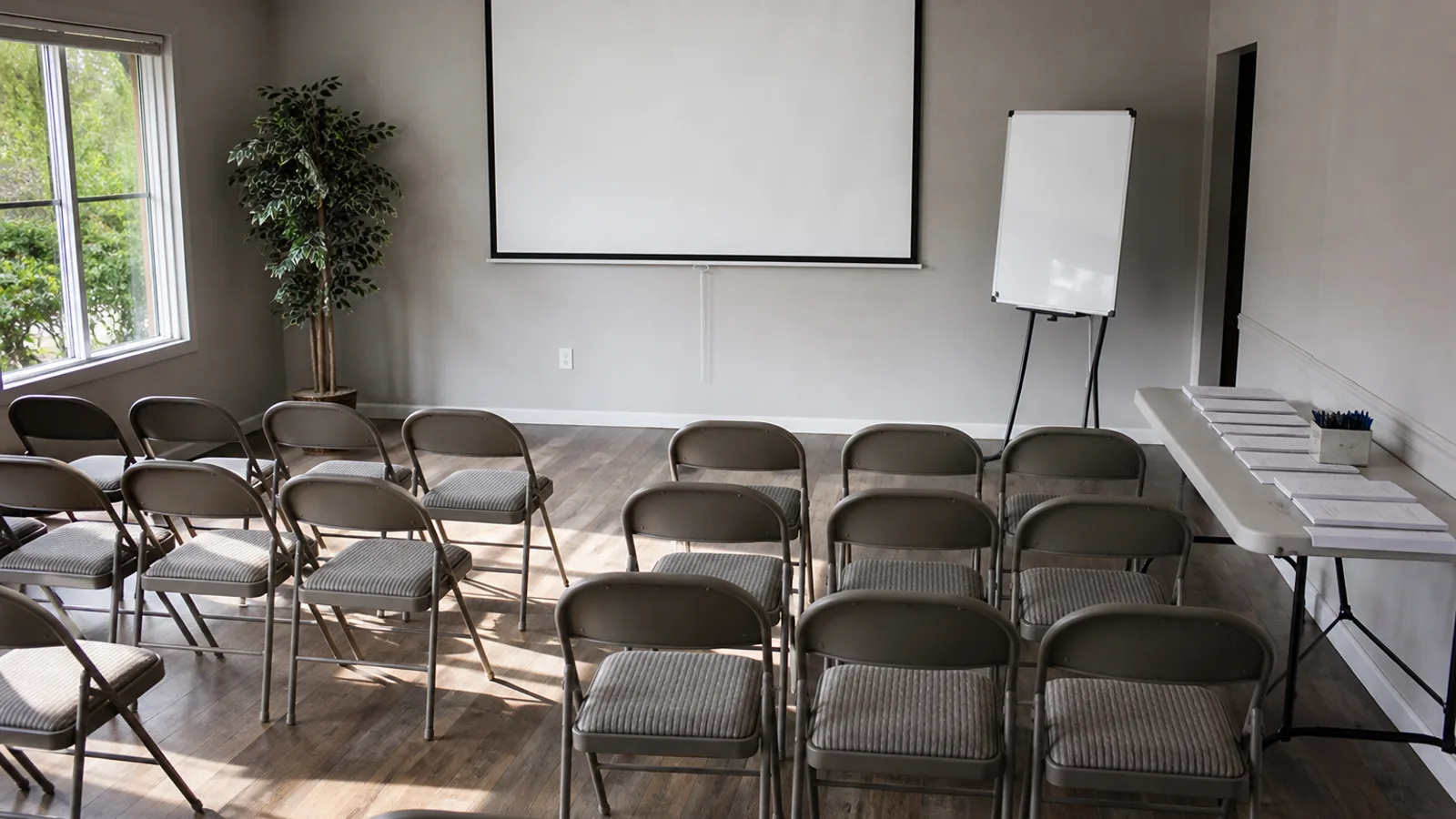
This is the gap isonew was built to close. We're a GTM Engineering studio in Apex, NC, serving the Research Triangle, and our nonprofit program — LEAP, "AI for Changemakers" — exists specifically to be the reinforcement layer the free courses lack. The free LEAP session is a 90-minute hands-on working session, not a lecture:
- You bring one real workflow — a grant report, a donor appeal, an intake note.
- You leave with one working AI agent running on your own data, portable to Claude or ChatGPT, yours to keep — no SaaS seat to keep paying for.
- No slides, no homework, no recording to forget. You practice the thing in the room, with an operator who can answer "why did it do that?" live. In forgetting-curve terms: instead of watching a webinar you'll lose by next week, you do the work once, correctly, on your real task — which is exactly the kind of practice that survives. We run LEAP in person at ReCity in Durham, inside the Triangle's social-impact ecosystem — and we see Durham's broader social-innovation ecosystem and organizations like the NC Center for Nonprofits as allies in sector AI literacy, not competitors. National programs (NTEN, TechSoup) give you the fundamentals; LEAP gives you the deployed tool. Most nonprofits need both, in that order. For teams that want the full Phase 1–4 path with weekly reinforcement, the LEAP Deploy cohort (4 weeks, $1,500 for 501(c)(3)s) builds 3+ documented workflows with a written playbook — the spaced-repetition structure that moves you from the 81% to the 4%.
Where to start this week
Want a read on where your organization actually stands before you invest a single staff hour? Our AI Opportunity Diagnostic is built for revenue teams but maps cleanly onto a nonprofit's donor-development and communications engine — it'll show you which workflow to fix first. For the methodology behind that score, the GTM teardown approach explains how we grade a system before rebuilding it. Then bring that workflow to a free session. Free training is everywhere. Training that changes your Monday is rarer — and it's built on practice, not playback.