What Can AI Actually Do for a Dental Practice in 2026?
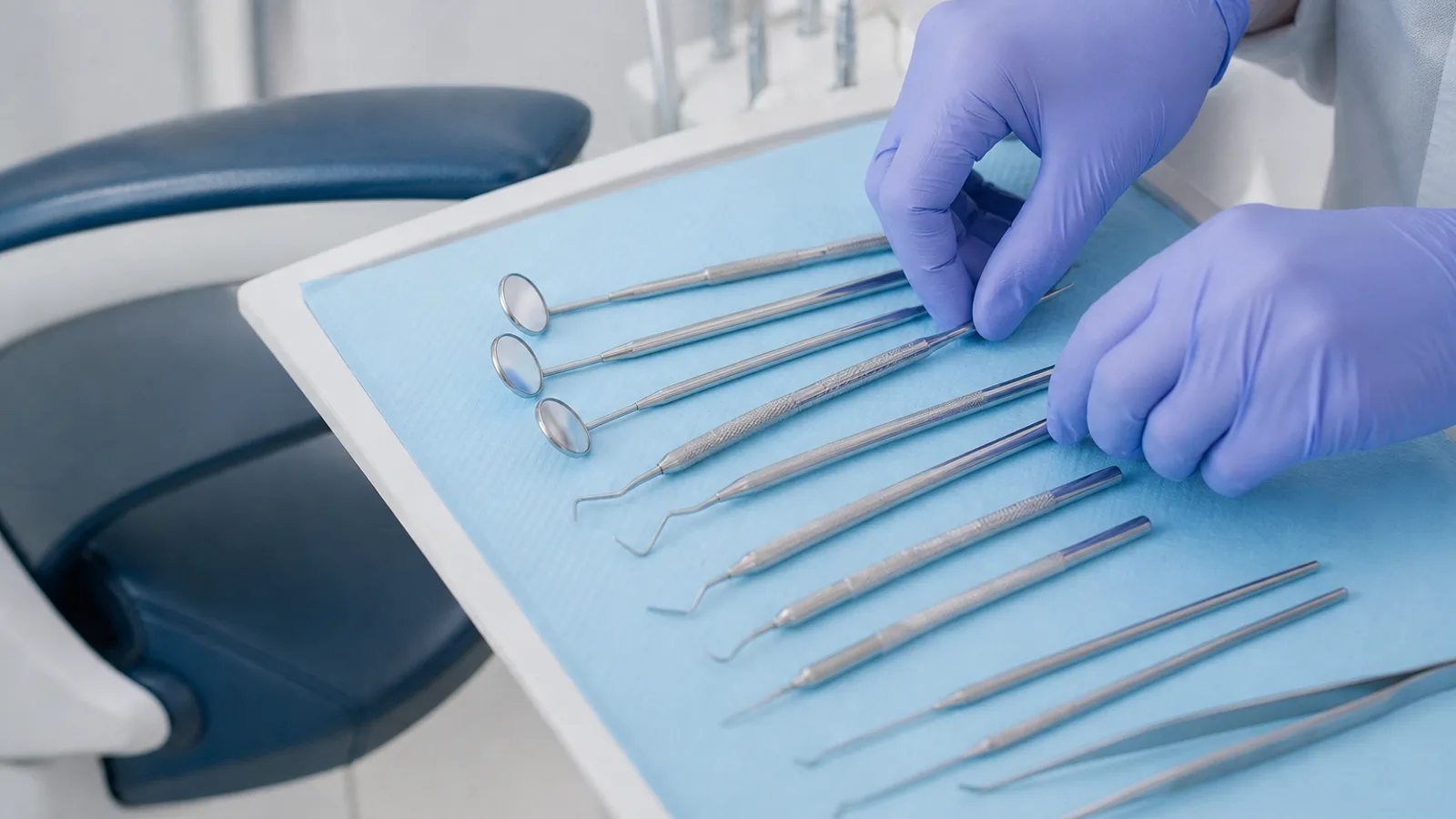
AI for dentists operates across two layers: clinical and operational. Clinical AI — FDA-cleared tools from Pearl, Overjet, and VideaHealth — reads dental radiographs and surfaces pathology while the licensed dentist confirms each diagnosis. Operational AI covers scheduling, recall, front-desk phone answering, insurance coding, and treatment-plan presentation. In January 2024, VideaHealth expanded its clearance to cover 30+ dental conditions on a single platform — the broadest single dental AI clearance at that time. The same underlying caries algorithm had already demonstrated in its original FDA trial that dentists using it missed 43% fewer cavities than those working unaided.
One critical constraint applies across every tool in this category: AI in dentistry is assistive, not autonomous. The dentist reviews and signs off on every finding. What changes is the completeness and consistency of the data in front of them.
This post covers six areas where AI earns its investment: radiograph diagnosis, scheduling and recall, voice front-desk, insurance claims, treatment-plan presentation, and reviews. For each, real tools, real evidence, and a clear flag on what to skip.
This post is part of isonew's AI for small business hub. For adjacent service verticals, see our guides for AI for accountants and AI for real estate agents.
Radiograph AI: FDA-Cleared, Human-in-the-Loop
This is the most mature corner of dental AI, and the FDA clearance bar is not a formality. Three platforms dominate, each with distinct cleared capabilities:
Pearl became the first dental AI company cleared by the FDA for both 2D and 3D imaging in May 2025, covering seven cleared modules across bitewing, periapical, panoramic, and CBCT — including caries detection, periapical radiolucencies, and periodontal bone-level measurement. In December 2024, the American Dental Association made a strategic investment in Pearl, treating imaging AI as durable clinical infrastructure rather than a near-term trend.
Overjet leads on cleared module count with ten FDA-cleared modules: caries detection for adult and pediatric patients (ages 4+), calculus detection, periapical radiolucency detection and segmentation, automated dental charting, bone loss quantification, AI image enhancement (noise reduction without loss of clinical detail), and CBCT analysis. It is the only dental AI platform currently FDA-cleared to sharpen blurry or noisy radiographic images.
VideaHealth holds the broadest single-platform clearance in the category. Beyond the diagnostic accuracy data, VideaHealth reports via a third-party aggregator an average of $78,000 in annual production lift per practice and a 22% increase in case acceptance at sites using color-annotated X-ray overlays at chairside. These are vendor-reported outcomes — evaluate them alongside the regulatory data, not instead of it.
| Platform | FDA-Cleared Modules | Key Differentiator | Imaging Types |
|---|---|---|---|
| Pearl | 7 | First cleared for 2D + 3D (CBCT); ADA-invested | BW, PA, Pano, CBCT |
| Overjet | 10 | Highest cleared module count; FDA-cleared image enhancement | BW, PA, Pano, CBCT |
| VideaHealth | 30+ conditions | Broadest single clearance; pediatric algorithm included | BW, PA |
Clearance scope differs by imaging type and patient population. Verify the specific indication for use against your patient mix and existing hardware before selecting a platform.
Scheduling and Recall: Where the Revenue Sits
Unfilled chairs and lapsed recall patients are the two largest revenue leaks in most general practices. AI addresses both without requiring clinical staff to manually manage the full outreach queue.
Dental Intelligence integrates with Dentrix, Eaglesoft, and Open Dental to score patients by recall lapse risk, outstanding treatment value, and last-visit recency. It automates outreach sequences — text, email, in-app reminders — and resurfaces dormant patients before they book elsewhere. The platform also provides a live production dashboard so practice owners see in real time which operatories are underperforming and why.
Weave combines VoIP calling, two-way texting, appointment reminders, digital intake forms, and insurance verification in one platform. AI additions in 2024–2025 include automated recall messaging, cancellation-fill, and an AI-assisted phone receptionist for overflow. For a practice wanting a single vendor covering communications and scheduling AI, Weave typically runs around $400–$500 per month depending on plan tier and add-ons.
Many practices run both simultaneously — Dental Intelligence for production analytics and patient scoring, Weave for day-to-day communications and scheduling management.
Front-Desk Voice AI: Answering the Calls You're Missing
More than one in three inbound calls to a dental office goes unanswered — during check-in rushes, lunch overlap, or when front-desk staff are managing a patient in chair. A Peerlogic analysis of 4,280 calls across a 26-practice dental group found 38% went unanswered, with new-patient calls converting at roughly 25%. AI follow-up — texting back missed callers — recovered an estimated $47,088 in a single month across that group. That is new-patient inquiries, treatment confirmations, and recare bookings walking out the door.
Annie and Arini both answer calls in natural language, schedule appointments, confirm insurance eligibility, and route clinical questions to staff, integrating with Dentrix, Eaglesoft, and other major practice management systems. Neither replaces a front-desk team; they absorb overflow and after-hours volume so staff can focus on patients who are physically present.
The ROI math is simpler here than for clinical AI: answer a call that would have gone to voicemail, book the appointment, capture the new patient. Most practices recover tool cost within the first few additional hygiene slots filled per month.
Insurance Claims and Coding: Fewer Denials, Faster Payment
Billing errors are expensive and slow. AI now analyzes clinical documentation and radiographs together to recommend defensible CDT codes, flag missing documentation before submission, and score each claim for denial risk.
Overjet has extended its imaging AI into the billing workflow, using the same pathology data that supports clinical diagnosis to recommend the most accurate CDT codes from the radiographic evidence. This ties the radiographic finding directly to the code selection and flags missing documentation before submission — reducing "unsupported procedure" denials that typically cost practices weeks of appeals work.
The primary value is not AI generating new revenue. It is AI preventing write-offs caused by incomplete documentation and mismatched code selection. Clean claims get paid faster — a direct, measurable effect on cash flow.
If your practice also handles in-house bookkeeping, the same automation logic extends to reconciliation and reporting. See our post on AI for bookkeeping for the workflows that pair naturally with billing automation.
Treatment-Plan Presentation: Case Acceptance as a System
A patient looking at a standard bitewing without clinical training cannot see what the dentist sees. AI imaging platforms close this communication gap by rendering color-coded overlays — caries in one color, bone loss in another — so patients understand the finding before the treatment conversation begins.
Both VideaHealth and Overjet include chairside presentation modes where annotated images display on a patient-facing monitor and are stored in the patient record for documentation. This is communication infrastructure, not diagnostic AI in the clinical sense — it converts treatment sitting on unaccepted plans into booked procedures.
This is one mechanism behind VideaHealth's reported 22% lift in case acceptance at active-adoption sites: patients who see a color-coded finding on their own radiograph understand the clinical case before you deliver the treatment estimate. That changes the conversation.
Reviews and Marketing: The Low-Effort Win
Review volume drives local search rankings, and consistently requesting reviews is something most dental front desks cannot manage manually for every patient. Weave automates review requests triggered by appointment completion — texting a direct Google or Healthgrades link while patients are still in the parking lot. Conversion at that moment is substantially higher than a follow-up email sent 48 hours later.
For content marketing, AI drafting tools handle dental patient education efficiently: procedure explanations, post-care instructions, and seasonal recall messaging. This is the same AI workflow automation that applies across every service practice; dentistry has a consistent, deep library of content types that benefit from AI-assisted drafting and scheduling.
What to Skip
Skip any platform marketing "AI-powered radiograph analysis" without specifying FDA clearance for the clinical claims it makes. "AI-powered" is a positioning choice. "FDA-cleared for caries detection on bitewing radiographs" is a documented regulatory designation with a specific indication for use, a defined patient population, and defined imaging types — with materially different liability implications for your practice.
Skip deploying overlapping systems before you have baseline data. A practice management system, a communications platform, and a clinical imaging AI is a coherent, measurable stack. Adding three more tools before evaluating the first three creates staff training debt and makes attribution nearly impossible.
If you manage multiple service-business clients — including contractors or field trades — our guide on AI for contractors covers scheduling, client communication, and billing automation that overlaps directly with dental operations.
When you're ready to map AI tools to your specific patient acquisition and retention gaps before buying anything, run the AI Opportunity Diagnostic.